Live Webinars
Join our monthly live webinar series and learn from international experts in ADHD research, clinical practice and education.
This webinar series is designed for clinicians and healthcare professionals with limited access to ADHD training, education, or specialist support, including those who are early in their careers. Accordingly, the programme focuses on building a strong foundation in ADHD knowledge, covering core principles and practical essentials presented by and discussed with leading experts. To make high-quality ADHD education accessible to as many healthcare professionals as possible, participation is offered free of charge.
Webinars are held monthly and offer opportunities to learn from leading experts and explore topics relevant to research, clinical practice and professional education.
The series launches with two webinars in October 2026, taking place on 14 and 21 October. From November onwards, webinars will continue on a monthly basis.
Upcoming Webinars
Upcoming webinars through December 2026 are listed below. The series will continue on 20 January 2027, with further programme details to follow.
14 October 2026
1:00 PM Berlin time (CEST / UTC+2)
Understanding and explaining Attention Deficit Hyperactivity Disorder
21 October 2026
1:00 PM Berlin time (CEST / UTC+2)
Misconceptions and stigma surrounding ADHD
18 November 2026
1:00 PM Berlin time (CET / UTC+1)
Impact of ADHD on parents / grandparents / carers at home and in schools
16 December 2026
1:00 PM Berlin time (CET / UTC+1)
How to diagnose ADHD in people without & with comorbidity?
Upcoming Webinar Details
Understanding and Explaining Attention Deficit Hyperactivity Disorder
14 October 2026
1:00 PM Berlin time (CEST / UTC+2)
About the Webinar
This webinar will help professionals develop a better understanding of ADHD and begin to distinguish ADHD-related behaviours from more typical behaviour. Participants will learn to recognise and understand why children with ADHD may behave in certain ways.
Who Should Attend?
This webinar is designed for anyone who supports children with or at risk of ADHD, including clinicians, teachers and support staff.
Meet the Speaker
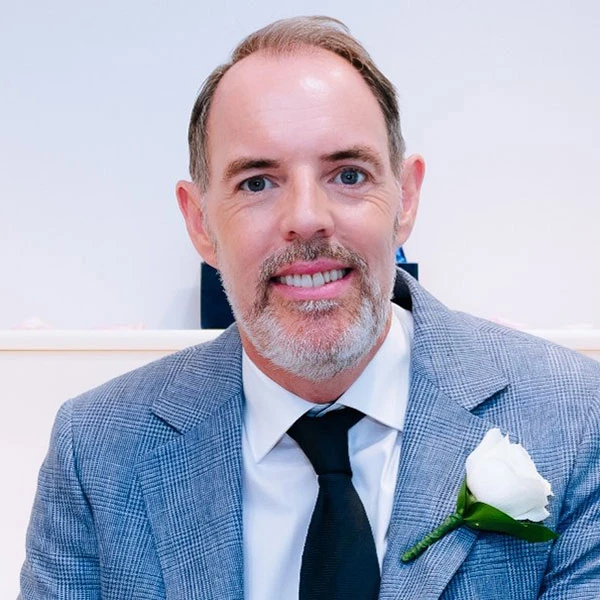
David Daley received his B.A (Hons). in Applied Psychology with Sociology from the National University of Ireland, University College Cork, Ireland and his Ph.D. in Developmental Psychopathology from the University of Southampton, UK. After time spent as an assistant Professor within the School of Psychology at the University of Southampton, and assistant and associate professor on the North Wales Clinical Psychology Doctoral Programme at Bangor University, he was appointed Professor of Psychological Intervention and Behaviour Change in the Division of Psychiatry School of Medicine, University of Nottingham in 2010. From July 2022 until July 2026, he was Head of Applied Psychological Practice at Nottingham Trent University, where he is now Professor of Psychological Intervention and Knowledge Exchange. David is also a member of NHS England’s Experts in Evidence ADHD taskforce, a member of the European Network on Hyperkinetic Disorders EUNETHYDIS, ADHD Guidelines Group and Co-chairs both the education and dissemination committees for the World Federation of ADHD. He is also international lead for the New Forest Parenting Programme.
David’s research interests are focused on non-shared environmental influences on child and adolescent development within the context of neurodiversity. In particular, he has devoted much of his career to the study of factors that enhance and interfere with the effective and enjoyable parenting of children with ADHD. He is also internationally recognised as an expert in environmental modification for neurodiversity.
Laver-Bradbury, C., Thompson, M., Weeks, A., Daley, D., & Sonuga-Barke, E. J. (2024). Step-by-Step Help for Children with ADHD: A Guide for Parents 2nd edition. Jessica Kingsley Publishers.
Haneda, R., Shimabukuro, S., Daley, D., & Tripp, G. (2025). Associations Between Child and Parent Characteristics and Parenting Stress in Japanese Mothers of Children With Attention Deficit Hyperactivity Disorder (ADHD). Journal of Attention Disorders, 10870547251315226.
Hornsey, S.J., Gosling, C.J., Jurek,L., Nourredine, M., Telesia, L., Solmi,,M., Butt, I., Greenwell, K., Muller, I., Hill, C., Cortese, S., Bilbow, A., Cook, A., Daley, D.,Everitt E., Lord, J.,Rubia, K., Santosh, P., Skene, D., Sharma, A. & Simonoff., E. (2025). Umbrella Review and Meta-Analysis: The Efficacy of Nonpharmacological Interventions for Sleep Disturbances in Children and Adolescents. Journal of the American Academy of Child and Adolescent Psychiatry, Journal of the American Academy of Child & Adolescent Psychiatry, 64(3), 329-345
Psyllou, C., Luman, M., van den Hoofdakker, Barbara., Van der Oord, S., Aghebati, A., Boyer, B., Buitelaar, J., Chronis-Tuscano, A., Daley, D., Dekkers, T., DuPaul, G., ; Fabiano, G., Ferrin, M., Franke, N., Gershy T., Harvey, E., Hennig, T., Herbert, S., Hoekstra, P., Kern, L., Mautone, J., Mikami, A., Normand, S., Pfiffner, Linda. (2025) Mechanisms of Change and Between-Family Differences in Parenting Interventions for Children with ADHD: An Individual Participant Data Meta-Analysis. Journal of Child Psychology & Psychiatry https://doi.org/10.1111/jcpp.14120
French, B., Wright, H., Daley, D., Vallejos, E. P., Sayal, K., & Hall, C. L. (2025). Evaluation and Uptake of an Online ADHD Psychoeducation Training for Primary Care Health Care Professionals: Implementation Study. JMIR Medical Education, 11(1), e59365.
French, B., Dekkers, T. J., Barclay, I., Black, M. H., Bölte, S., Daley, D., ... & Martin, J. (2025). The power of words: respectful language in ADHD research. The Lancet Psychiatry, 12(12), 876-879.
Baraniuk, A. O., Salum, G. A., Daley, D., de Morais, E. M., Zabala, F. J., de Souza, L. E., Sugaya, L. S. (2026). Irritability in preschool children with attention‐deficit hyperactivity disorder: Analysis of family environmental factors. JCPP Advances, e70120
Cortese, S., Daley, D., Hollis, C., Rae, S., Ani, C., Asherson, P., Ani, C., Asherson, P., Downs,J., Dubicka, B., Foreman, D., Green,J., Heyman, I., Hodes, M., Kyriakopoulos,M., Liang, H., Majumder,P., McArdle,P., Müller-Sedgwick, U., Newlove-Delgado,T., Nicholls, D., Ougrin, D., Price, A., Russell, A., Salazar-de-Pablo, G., Paramala, S., Sayal, K., Scott, S., Shaw, P., Simonoff, E., Wickersham, A., Wilkinson,P., Young, S, Ford, T. (2026). ADHD (over) diagnosis: fiction, fashion and failure. The British Journal of Psychiatry, 1-4
Price, A., Furukawa, E., , Bellato, A., Aggensteiner,P.M., Bellringer, M., Cattel,C., Cortese, S., Daley, D., Döpfner, M., Donno,F., Groom, M.J., Kaiser,,A. Kini-Seery, C., Kostyrka-Allchorne,K., Kuntsi,K., Kyle,K, Liddle, E.B., Michelini, G., Nordby,E., Peres, N., Ruzive, T., Salimi, A., Sjöwall,D., Sonuga-Barke, E.J.S., Wenger, J., Newlove-Delgado, T. (2026). Consensus Statement on Digital Health and ADHD by The European Network for ADHD (EUNETHYDIS): a modified Delphi study. Journal of Medical Internet Research 28, e85638
Misconceptions and stigma surrounding ADHD
21 October 2026
1:00 PM Berlin time (CEST / UTC+2)
About the Webinar
Join our upcoming webinar to examine the misconceptions and stigma surrounding Attention-Deficit/Hyperactivity Disorder (ADHD) and their impact on clinical outcomes. It will unpack common myths, such as the belief that ADHD is solely a childhood behavioral issue or a simple lack of focus, and explore how these societal biases lead to delayed diagnoses, internalized shame, and systemic barriers to care.
Who Should Attend?
Designed for healthcare and mental health professionals, this session identifies and dismantle these prejudices, empowering clinicians to foster a more accurate, empathetic, and effective therapeutic environment for patients diagnosed with ADHD.
Meet the Speaker

Stephen Faraone is a Distinguished Professor in the Departments of Psychiatry and Neuroscience & Physiology at SUNY Upstate Medical University and Director of Research for the Department of Psychiatry. He is also Senior Scientific Advisor to the Research Program Pediatric Psychopharmacology at the Massachusetts General Hospital and a lecturer at Harvard Medical School. Prof. Faraone studies the nature and causes of mental disorders in childhood and has made contributions to research in psychiatric genetics, psychopharmacology, diagnostic issues and methodology.
An author on over 1000 journal articles, editorials, chapters and books, he was the eighth highest producer of High Impact Papers in Psychiatry from 1990 to 1999. In 2002, Prof. Faraone was inducted into the CHADD Hall of Fame in recognition of outstanding achievement in medicine and education research on attention disorders. In 2008, he received the SUNY Upstate President’s Award for Excellence and Leadership in Research. In 2009 he was awarded Alumni Fellow status at the University of Iowa in recognition of his outstanding contributions to society and his profession. In 2010 he received the Chancellor's Award for Excellence in Scholarship and Creative Activities from the State University of New York. In 2013, he was awarded the title of Distinguished Professor by the State University of New York, which is conferred upon faculty having achieved national or international prominence and a distinguished reputation within the individual’s chosen field through significant contributions to the research and scholarship, or through artistic performance or achievement in the fine and performing arts. In 2018 he received the Lifetime Achievement Award from the International Society of Psychiatric Genetics and in 2019 he received the Paul Hoch Award from the American Psychopathological Association.
Webinar Feedback
Have you attended this webinar? Your feedback is important. Please take 3 minutes to complete our short survey. Thank you very much!
Past Webinars
Missed a webinar or want to watch it again? Recordings of previous webinars are available in our Webinar Library.